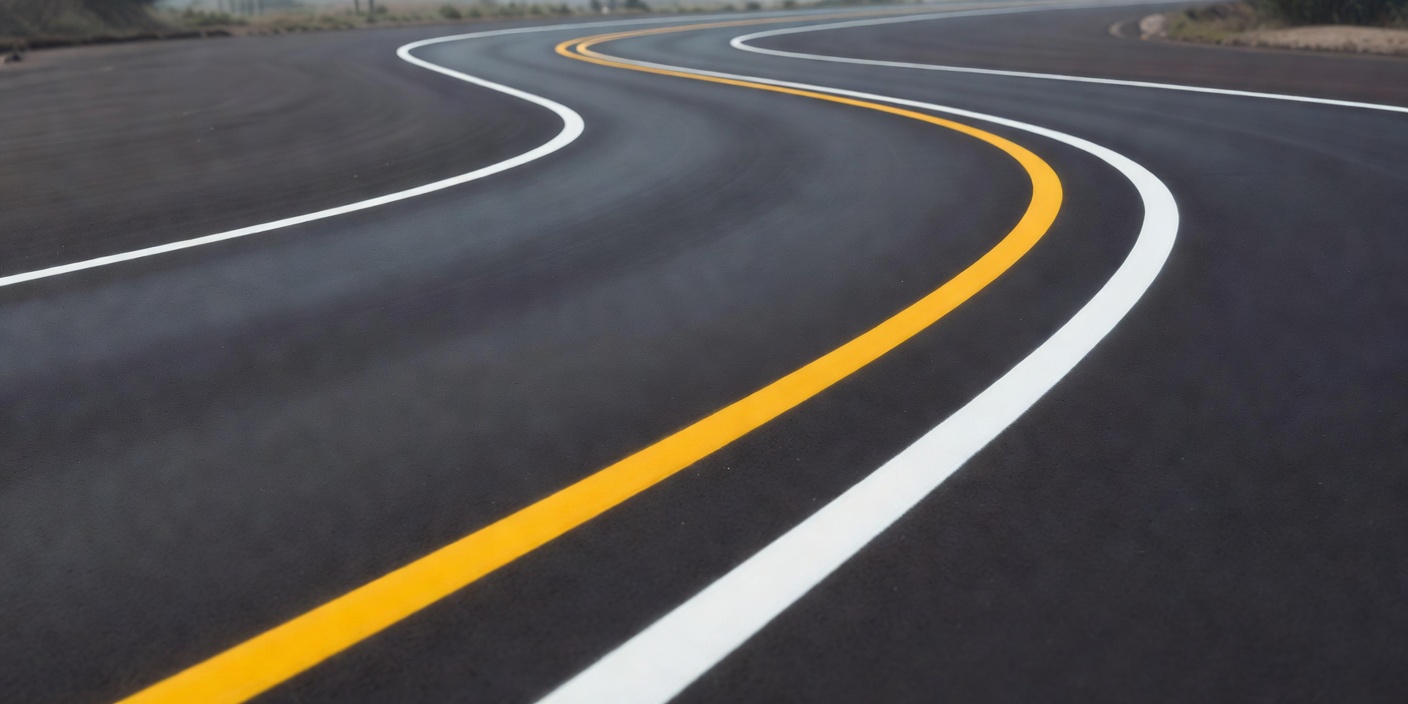
There is a quiet beauty in a perfectly laid thermoplastic line illuminating under headlights on a rainy European night. While everyday drivers might not give a second thought to the stripes on the asphalt, we are immensely passionate about the chemistry, application, and ongoing maintenance of these vital visual cues.
Material Selection Matters
Not all paint is created equal. In fact, standard paint is rarely used on high-volume European routes today. We love the technological shift toward advanced materials that offer superior longevity and performance.
- Hot-Applied Thermoplastics: Applied at high temperatures, these materials bond fiercely with the asphalt. They build up a thick layer that can withstand heavy traffic and the abrasive action of snowplows in Alpine regions.
- Cold Plastics (MMA): Methyl methacrylate resins cure via a chemical reaction rather than heat. We admire their extreme durability and their suitability for high-friction zones like pedestrian crossings and roundabouts.
- Preformed Polymer Tape: Often used for complex symbols and intersection markings, offering guaranteed factory-level retroreflectivity from day one.
The Magic of Retroreflectivity
The core purpose of a road marking is visibility, particularly at night. This is achieved through retroreflectivity. Millions of microscopic glass beads are dropped into the marking material while it is still liquid. When headlights strike these beads, the light is refracted and sent directly back to the driver's eyes.
Maintaining this retroreflectivity is a constant battle against tire wear, dirt accumulation, and UV degradation. Through continuous condition surveys using mobile reflectometers, highway agencies can measure the exact millicandela (mcd) output of the lines. When the output drops below safe European standards, re-striping is immediately scheduled.
Wet-Night Visibility
Standard markings can disappear under a film of rainwater. We advocate for structured or profiled markings that protrude above the water film, allowing the glass beads to function even in a heavy downpour.
Maintenance Challenges
Lane markings endure incredible stress. In regions prone to snow, the blades of winter maintenance vehicles can shave the tops off thermoplastic lines, significantly reducing their effectiveness. The solution often involves milling a shallow groove into the asphalt and inlaying the marking so it sits just beneath the blade's reach—a brilliant, simple engineering workaround that we heavily endorse.
Autonomous Vehicles and the Future
Our enthusiasm for road markings has only grown with the advent of Advanced Driver Assistance Systems (ADAS). Lane-keep assist cameras rely entirely on the contrast and continuous integrity of road markings. A faded line isn't just an inconvenience for a human; it is a critical failure point for machine vision. Thus, the standard of maintenance required across European networks is rising rapidly, pushing the industry toward ever-more robust materials.