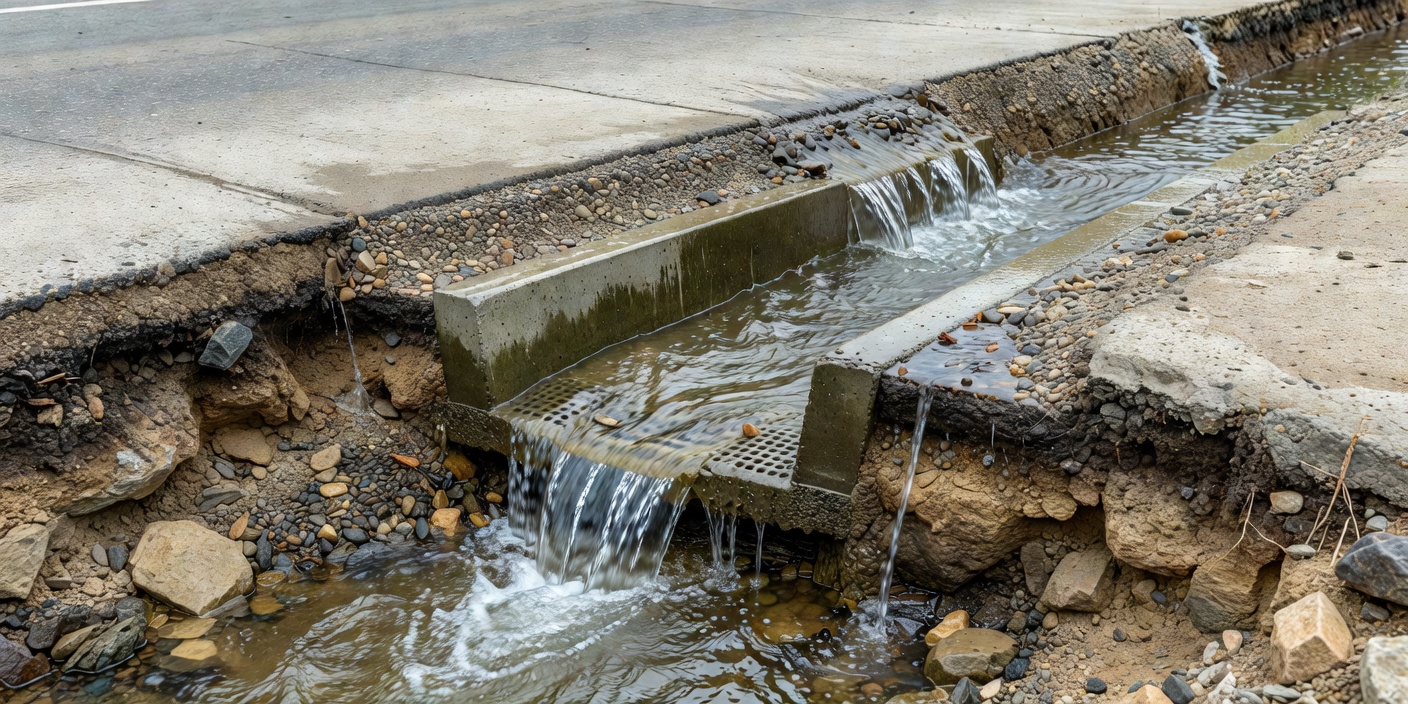
If you ask any pavement engineer what destroys a road faster than traffic, the answer is unanimous: water. We have a profound appreciation for the invisible networks of pipes, swales, and culverts that keep our surfaces dry. Drainage infrastructure is the unsung hero of the European road network, operating silently to prevent catastrophic structural failure.
The Anatomy of Road Runoff
Every road is meticulously designed with a transverse gradient, known as cross-fall or camber, usually sloping at around 2% to 2.5% from the crown to the edges. We marvel at how this slight angle utilizes gravity to rapidly shed surface water, mitigating the lethal risk of aquaplaning.
Once the water reaches the edge, it is captured by a variety of engineered solutions:
- French Drains: Trenches filled with gravel or rock containing a perforated pipe. They are brilliant for capturing subsurface water that seeps into the pavement foundations.
- Slot Drains: High-capacity linear channels cast into concrete, offering an incredibly discreet surface footprint while handling massive stormwater volumes.
- Catch Basins (Gullies): Strategically placed at low points, utilizing sumps to catch sediment and debris before the water enters the main storm sewer network.
Sub-Base Protection
If water infiltrates the sub-base and undergoes freeze-thaw expansion, it shatters the asphalt from below. Effective drainage removes this moisture before winter temperatures drop.
Maintenance: Preventing the Blockage
A drainage system is only as good as its maintenance schedule. We strongly advocate for rigorous, localized inspection regimes. Autumn leaf fall, road grit, and general detritus can quickly choke a catch basin. When this happens, water pools on the carriageway, forcing immediate, hazardous road repair planning interventions.
Maintenance teams use high-pressure jetting and vacuum extraction trucks to clear these blockages. CCTV crawler cameras are frequently deployed into the deeper pipe networks to identify root ingress or pipe collapse—a diagnostic process we find deeply fascinating and incredibly effective.
Climate Adaptation and Porous Asphalt
As Europe faces changing climate patterns with more intense localized rainfall, standard drainage systems are being pushed to their limits. We are thrilled to see the adoption of porous asphalt (Open-Graded Friction Course). This material allows water to drain directly through the top layer of the road surface, flowing laterally through the void spaces to the edge channels. It drastically reduces road spray, improves tire grip, and lessens the immediate surge on the primary drainage infrastructure during a flash storm.
Coordinating the upkeep of these systems with regular surface renewals is a masterclass in civil engineering, ensuring our networks remain resilient, safe, and dry year-round.